

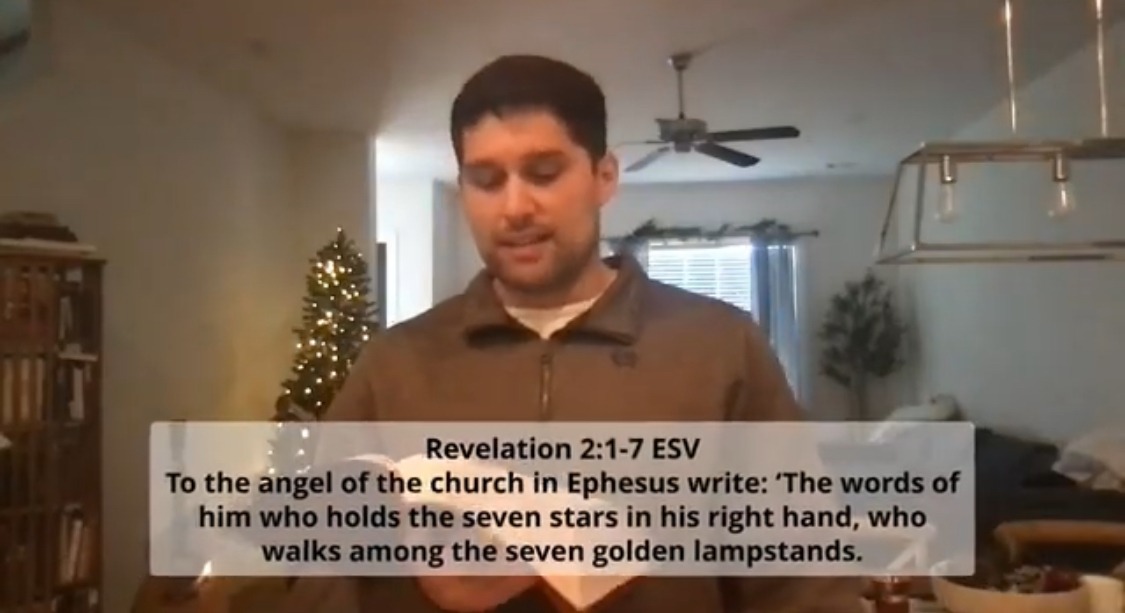
Sermon Summary: “Go Back to Your First Love”
Friends, I want you to imagine something with me: The first time you truly fell in love 🙂 that all-consuming, fiery first love—the constant hand-holding, written love notes, creative dates, those 45-minute goodbyes, the endless desire to be near them. Now, fast forward with me 20 years. You’re committed, you’re busy, you’re managing the house and the kids well, you’re doing all the right things, but the intimacy is gone. The affection is replaced by dutiful routine.
This is the exact picture Jesus presents to the church in Ephesus in Revelation 2:1-7.
Part 1: The Church In Ephesus Lost Its First Love.
When the Apostle John, exiled on Patmos, received this terrifying, yet beautiful vision, Jesus gave them a commendation and a correction. The Ephesian church was a model of orthodoxy. Jesus commends them: “I know your works, your toil, and your patient endurance, and how you cannot bear with those who are evil, but have tested those who call themselves apostles and are not, and found them to be false.” (Rev. 2:2-3, ESV). They even “hate the works of the Nicolaitans, which [Jesus] also hate[s].” (Rev. 2:6, ESV). They championed righteousness and resisted the teachings of Balaam/Gnosticism that said the flesh doesn’t matter.
But Jesus delivers a devastating blow in Verse 4: “But I have this against you, that you have abandoned the love you had at first.”
What was this first love? If we look to Paul’s counsel to the Ephesians, we see that to live in Christ is to live in love and righteousness together, to walk “with humility and gentleness, with patience, bearing with one another in love,” (Eph. 4:2, ESV). The Ephesians had championed righteousness, but by the time John writes, they had lost the love they were taught at first.
Part 2: The Church Today Lost Its First Love.
Likewise, the Church today has lost our passionate first love for Jesus and our neighbor. We too stand for righteousness against the evils of our day, but as we have been taking a stand in spiritual warfare, our love has grown cold. We have lost that first love for Jesus and, consequently, our love for each other.
The Spirit is speaking to the church today, asking us to “Remember therefore from where you have fallen; repent, and do the work you did at first.” (Rev. 2:5, ESV). Jesus prioritizes and places a high value on intimacy—we are His Bride. If we do not have love for Christ and our neighbor, we are at risk of a serious consequence: “If not, I will come to you and remove your lamp stand from its place, unless you repent.” (Rev. 2:5, ESV).
Part 3: Jesus Passionately and Relentlessly Loves The Church In Ephesus.
Praise the Lord that Jesus Christ passionately and relentlessly loves the church in Ephesus. We love because HE FIRST LOVED US.
The good news is that “Those whom I love, I reprove and discipline, so be zealous and repent.” (Rev. 3:19, ESV). Jesus is offering constructive criticism, not destructive condemnation! When we read His words, we hear a passionate lover’s voice saying, “I want you to conquer, to eat of the tree of life, which is in the paradise of God.” (Rev. 2:7, ESV).
This process is called sanctification, and repentance is the key that unlocks new levels in our intimacy and walk with Jesus. Intimacy with us is Jesus’s chief desire, which naturally moves us to loving our neighbor.
The Ephesians had faith, virtue, knowledge, self-control, steadfastness, and godliness, but they lacked brotherly affection, and love (2 Peter 1:5-8). Praise God, Jesus gave them a chance to repent and return to the work that they did at first!
Part 4: Jesus Is Calling The Church, His Bride, Back To Intimacy.
Likewise, Jesus is calling us, the church today, because He relentlessly and passionately loves His Bride. He is waiting for the “Bride to make herself ready” (Rev. 19:7, ESV). There is still time to return to our first love and the works we did at first when He first saved us.
Jesus wants us to conquer and has supplied every grace we need for victory. At the same time we stand up for righteousness, Jesus is asking us to remember brotherly affection and love. We love God because He first loved us. This love ought to move us toward love for each other.
Go back, Go back to the love you had and work you did at first!


0 Comments